Are you a victim of your own over complicated emotional life?
The Grimmer & Steele Trust can help to provide you with a remedy.
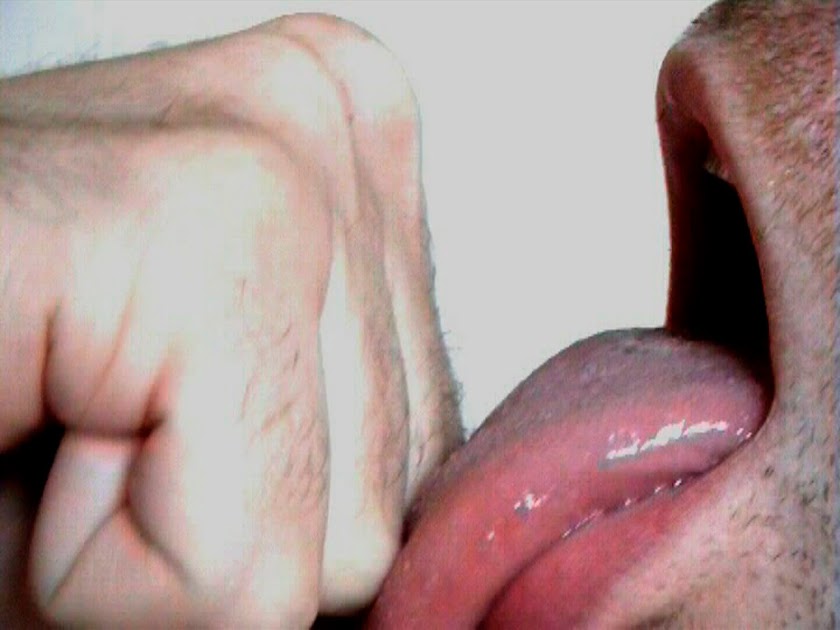
We specialise in care enforcement, and can offer you a free perceptual augmentation session with the Trusts well-balanced carers. The session will provide you with a positive personalised package of sensory respite and reaffirmation - designed with you in mind.
Make yourself comfortable, relax and watch this...
Sunday, 30 November 2008
Friday, 21 November 2008
Transhumation - Dulverton Town Hall


Transhumation 2008, Powder coated aluminium, digital image printed on acrylic opal, LED's, 200 x 200 cm
These images show the installation of the work at Dulverton Village Hall on Exmoor National Park for the Triparks preview event, Thursday 15th - Sunday 18th October. During the installation and preview period the work attracted a lot of attention from local residents, and I hear was even discussed at the writing group who meet weekly in the space. Due to this interest in the work it has been able to remain there until the main body of the Triparks tour begins next spring on Dartmoor.
The work initiated many interesting conversations, a lot of which revolved around individual spiritual readings and similarities in construction of the image to that of a rose window, a feature of church architecture. Someone commented that the work resembled Hindu or Buddhist mandala's and had similar meditative qualities, I found this very interesting. We talked about how the work was difficult to understand as a whole without understanding it's individual components, and how the eye was constantly pulled back and forth across its surface.

Proximity Effect - The Grimmer & Steele Trust will help you to feel good about you!
Press Release -
29 November 2008 – 11 January 2009
You are invited to the opening event
Friday 28 November, 6.30–8.30pm
The exhibition opens with demanding performance by Leo Devlin curated by Red Ape, arm wrestling by Ray White and a performance by guests the Grimmer & Steele Trust, heralding the start of this daring programme.
ArtsMatrix and Plymouth Arts Centre are also supporting three artist-led projects in the city of Plymouth: Pilot, U:1 studios and new work by Café Concrete.
Exhibition
29 November 2008 – 11 January 2009
A series of performances, installations, videos and live music by visual artists from the city of Plymouth. The group is brought together for the first time, each with their own individual practice and curatorial experience, to consider the effect of their proximity to the city and each other.
Low Profile embark on a marathon performance: watching the entire 1st series of hit 1980s TV show MacGyver, back-to-back, cataloguing numerous ways of saving the day: rolling under doors, escaping burning buildings and fooling the guards.
Rooting contemporary music to locality and heritage, onec have invited bands and musicians to interpret songs of the sea for a compilation LP. Ray White creates an arm-wrestling forum in the galleries, alongside a relaxation room by the Grimmer & Steele Trust. Nick Grew, in collaboration with Heidi C Morstang, presents a new films, Grain Silo, featuring the erstwhile relic of Plymouth’s skyline. Marianne Torrance continues her research with people who share her passion for ecology, exploring art and marine science collaborations, in partnership with the Marine Biological Association and Plymouth City Council. Red Ape is an enquiry into the relationship between language and live performance. Curated by Mark Greenwood, the project explores issues around male identity and anxieties.
Curator Paula Orrell explains: "We have offered a selected group of artists the opportunity to curate/develop an exhibition in collaboration with Plymouth Arts Centre. The objective is to develop a critical space for the artists to examine their own context and offer up a broader understanding of their work. It encourages exchange and development of links between artists in the region, country and beyond, considering the current climate of the visual arts and the development of audience and profile within the city of Plymouth."
29 November 2008 – 11 January 2009
You are invited to the opening event
Friday 28 November, 6.30–8.30pm
The exhibition opens with demanding performance by Leo Devlin curated by Red Ape, arm wrestling by Ray White and a performance by guests the Grimmer & Steele Trust, heralding the start of this daring programme.
ArtsMatrix and Plymouth Arts Centre are also supporting three artist-led projects in the city of Plymouth: Pilot, U:1 studios and new work by Café Concrete.
Exhibition
29 November 2008 – 11 January 2009
A series of performances, installations, videos and live music by visual artists from the city of Plymouth. The group is brought together for the first time, each with their own individual practice and curatorial experience, to consider the effect of their proximity to the city and each other.
Low Profile embark on a marathon performance: watching the entire 1st series of hit 1980s TV show MacGyver, back-to-back, cataloguing numerous ways of saving the day: rolling under doors, escaping burning buildings and fooling the guards.
Rooting contemporary music to locality and heritage, onec have invited bands and musicians to interpret songs of the sea for a compilation LP. Ray White creates an arm-wrestling forum in the galleries, alongside a relaxation room by the Grimmer & Steele Trust. Nick Grew, in collaboration with Heidi C Morstang, presents a new films, Grain Silo, featuring the erstwhile relic of Plymouth’s skyline. Marianne Torrance continues her research with people who share her passion for ecology, exploring art and marine science collaborations, in partnership with the Marine Biological Association and Plymouth City Council. Red Ape is an enquiry into the relationship between language and live performance. Curated by Mark Greenwood, the project explores issues around male identity and anxieties.
Curator Paula Orrell explains: "We have offered a selected group of artists the opportunity to curate/develop an exhibition in collaboration with Plymouth Arts Centre. The objective is to develop a critical space for the artists to examine their own context and offer up a broader understanding of their work. It encourages exchange and development of links between artists in the region, country and beyond, considering the current climate of the visual arts and the development of audience and profile within the city of Plymouth."
Thursday, 20 November 2008
Chimera - Hybrid Specimen 1
The 5 body-landscape hybrids shown here as separate cycles and clips are combined to form the video component of Chimera (22 min. 40 secs.). The cycles follow the order indicated here on a continuous loop within the specimen case shown below. For the purposes of the blog they have been separated.
Time-lapse footage of cellular mitosis used with the kind permission of Susana Abreu Ribeiro at The Earnshaw Group, The Wellcome Trust Centre for Cell Biology, Edinburgh
Time-lapse footage of cellular mitosis used with the kind permission of Susana Abreu Ribeiro at The Earnshaw Group, The Wellcome Trust Centre for Cell Biology, Edinburgh
Chimera - Hybrid Specimen 2
Time-lapse footage of cellular mitosis used with the kind permission of Alexey Khodjakov, Wadsworth Center, Albany, New York
Chimera - Hybrid Specimen 3 (clip)
Time-lapse footage of cellular mitosis - interphase used with the knid permission of Dr. Yuko Mimori-Kiyosue on behalf of Shoichiro Tsukita
Chimera - Hybrid Specimen 4
Time-lapse footage of cellular mitosis used with the kind permission of John Daum & Gary J Gorbsky
Tuesday, 18 November 2008
Chimera - Hybrid Specimen 5
Time-lapse footage of cellular apoptosis used with the kind permission of Susana Abreu Ribeiro at the Earnshaw Group, The Wellcome Trust Centre for Cell Biology, Edinburgh
Chimera - Specimen Case


Chimera specimen case constructed by Mark Burns (Burnie) and Tony Wiles, dimensions - 900 x 600 x 400 cm, constructed using Iroko hardwood, Perspex, brass fastenings, 24" LCD monitor and computer equipment.
This design had to be slightly modified by shortening the legs for the final piece.
+Chimera+%28production+still%29.jpg)
+Chimera+%28production+still%29.jpg)
+Chimera+%28production+still%29.jpg)
Monday, 3 November 2008


Friday, 31 October 2008
Up the Hill Backwards
Northumberland National Park is home to some of the most remote, uninterrupted, and unpopulated areas of land in the UK. It is a threshold space, a geographical and psychological borderland with a completely unique identity; it is a place of unquestionable beauty. My time in the park was largely spent alone, a sort of solitary release. The vast expanse of the landscape offers a rare opportunity, a time for silent introspection, a feeling of weight and weightlessness, perhaps a glimpse of your own mortality. It is something to do with space, the distant horizon and the big skies; you cannot help but ponder scale, your own existence and the connection you have to what is around you right now. The land seems to whisper to you…
The work I produced during my time in, on and with Northumberland National Park grew from a temporary symbiosis, from a relationship that began more like an infection - my own body as the foreign agent. Negotiating a relationship with the landscape takes time, and as certain systems and processes start to become clear, latent internal conflict becomes visible. It seems there are endless contradictions, a push and pull of opposites: timelessness and dynamism, natural order and the order imposed by man, to name a few. However, these opposites are held in perfect equilibrium, a balance between wilderness and control, an understanding that has developed through years of co-existence. Preservation of this delicate balance is explored in the works Chimera and Transhumation.
There is a profound relationship between the landscape and the body that transcends a singular definition. A hybrid of mythological, philosophical, scientific and spiritual connections must be considered. As my time in the park passed some of these connections were consolidated into a visual language of shared sets - bone and rock, layers that settle, cycles that blend together through time becoming part of a unified and balanced system. I explored the parks archaeological history as a way to communicate these connections, using traces of the body as source material. Though intact examples of human remains are rarely found in the park due to acidic soils I was able to work with archaeologists to examine human bones excavated from similar burial sites in the UK. Bones often ravaged by disease causing premature death or physical deformity, bones respectfully returned to the Earth which once provided life, completing a cycle. Working with scientists at the Wellcome Trust Centre for Cell Biology and the Centre for Life, further traces of the body were collected. I was able to study time-lapse footage of human and animal cell cycles, in essence, existence expressed in its most universal terms. A highly ordered symmetry of process shared by all living organisms within the park, an order that represents everything we endlessly struggle to control and are helplessly at the mercy of.
Acknowledgements:
I would like to thank: Dr William Earnshaw and the Earnshaw Research Group at the Wellcome Trust Centre for Cell Biology (Edinburgh) and Professor Charlotte Roberts (Durham University) for their contribution. I would also like to thank The Centre for Life (Newcastle upon Tyne), The Institute of Design Innovation (Middlesbrough), and the Northumberland National Park Authority for their support. Individual footage credits for Chimera: John Daum and Gary Gorbsky, Alexey Khodjakov, Susana Abreu Ribeiro, Shoichiro Tsukita and Yuko Mimori-Kiyosue.
The work I produced during my time in, on and with Northumberland National Park grew from a temporary symbiosis, from a relationship that began more like an infection - my own body as the foreign agent. Negotiating a relationship with the landscape takes time, and as certain systems and processes start to become clear, latent internal conflict becomes visible. It seems there are endless contradictions, a push and pull of opposites: timelessness and dynamism, natural order and the order imposed by man, to name a few. However, these opposites are held in perfect equilibrium, a balance between wilderness and control, an understanding that has developed through years of co-existence. Preservation of this delicate balance is explored in the works Chimera and Transhumation.
There is a profound relationship between the landscape and the body that transcends a singular definition. A hybrid of mythological, philosophical, scientific and spiritual connections must be considered. As my time in the park passed some of these connections were consolidated into a visual language of shared sets - bone and rock, layers that settle, cycles that blend together through time becoming part of a unified and balanced system. I explored the parks archaeological history as a way to communicate these connections, using traces of the body as source material. Though intact examples of human remains are rarely found in the park due to acidic soils I was able to work with archaeologists to examine human bones excavated from similar burial sites in the UK. Bones often ravaged by disease causing premature death or physical deformity, bones respectfully returned to the Earth which once provided life, completing a cycle. Working with scientists at the Wellcome Trust Centre for Cell Biology and the Centre for Life, further traces of the body were collected. I was able to study time-lapse footage of human and animal cell cycles, in essence, existence expressed in its most universal terms. A highly ordered symmetry of process shared by all living organisms within the park, an order that represents everything we endlessly struggle to control and are helplessly at the mercy of.
Acknowledgements:
I would like to thank: Dr William Earnshaw and the Earnshaw Research Group at the Wellcome Trust Centre for Cell Biology (Edinburgh) and Professor Charlotte Roberts (Durham University) for their contribution. I would also like to thank The Centre for Life (Newcastle upon Tyne), The Institute of Design Innovation (Middlesbrough), and the Northumberland National Park Authority for their support. Individual footage credits for Chimera: John Daum and Gary Gorbsky, Alexey Khodjakov, Susana Abreu Ribeiro, Shoichiro Tsukita and Yuko Mimori-Kiyosue.


Subscribe to:
Posts (Atom)