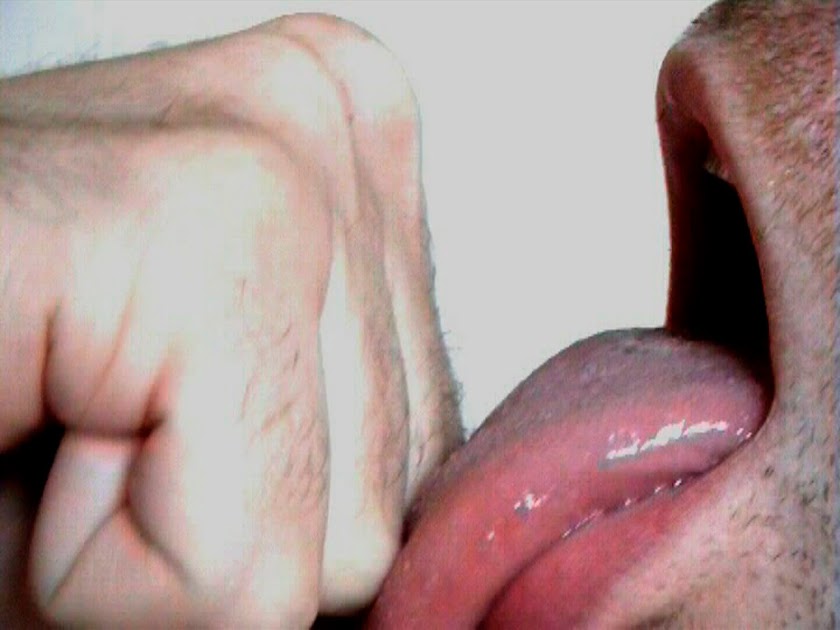
Thursday, 7 May 2009

Anatomy of the Human Hand


I met up with hand surgeon Brid Crowley, we talked about the anatomical structure of the hand as well as discussing the symbolism and importance of the hand to our sense of self.

Brid provided these images as a visual guide to the anatomy of the hand. The images build from the X-Ray through layers of ligaments, tendons, nerves, muscles, veins and arteries and skin. Talking to Brid and looking at the images was facinating, the underlying mechanics are so complex and they function with perfect harmony. We also looked at some examples of hands which had not formed correctly for one reason or another.

Wednesday, 29 April 2009

Monday, 27 April 2009

All that Glitters, All in Hand

Ideas for the residency seem to be revolving around 2 main elements: gold and the symbol of the hand. Gold is one of the base elements, the hand is a symbol of humanity, human consciousness and connection with the elements. Both of these have links with alchemy, which also connects to Allenheads, it's lead mining history and the alchemists attempts to transform lead into gold. Both are symbolically linked with duality.

Hand = Body
Gold = Transition


Gold is only one letter away from God
  • Gold is the most malleable metal know to man
  • For scientific application of gold see - Trust in Gold
  • In religion and mythology it has been used to symbolise both good and evil, a blessing and a curse
  • It is often used in spiritual iconography to symbolise the divine, though it has also been used as a symbol of idolatry
  • It is very important in mythology, in alchemy it is the ultimate goal, it has the power to heal - the golden fleece, it is the curse of Midas, it symbolises the greed of humankind - the golden egg
  • It is bling...
The hand is often used to represent the body or humanity, it has a rich and ambiguous symbolism and meaning and this is why I often use its image in my work. Hands can also be linked with duality – symbols of power, dominance and enforcement (a fist) and of meditation, healing and enlightenment (an open palm). Left and right also represent a duality between yin and yang, light and dark, past and future. Hands can be seen as a primary method of non-verbal human communication. The hand also has certain symbolic connections to the 5 classical elements: earth, fire, water, air and aether.

At the moment gold and the symbol of the hand seem connected in a bit of a loose web...

Gold > mutability > alchemy > transformation > lead > mining > Allenheads

Gold > iconography > spirituality > belief > healing > symbolism > hand

Hand > five > pentagon > transitional > viral > mutation > gold

Hand > five > symbolism > classical elements

Mining and the Elements

Allenheads village was founded on the lead mining industry, without this rich supply the area would probably never have been established as it would have been considered too inhospitable due to it's elevated location.

Alan Smith gave me a tour of the area surrounding Allenheads village which really helped to put things into perspective, giving me an idea of the geographical and cultural landscape and history. It also helped to bring into focus some of the information which I received on my visit to Killhope Lead Mining Museum during the first visit to ACA.

We began at the source, the watershed, high above the valley, an area of land where the water collects and is held. The land itself is reminiscent of a bog in texture, though as the water is the source of the river and is constantly moving it is not as rich in terms of biodiversity.

The village of Allenheads was founded on this supply, it's location further down the valley making full use the building force of the water. Alan and I traced this journey seeing the ways that the water was controlled and manipulated using dams and other methods of channeling to make full use of it's potential power and other properties in the various processes of mining the landscape.

We passed one of the last remaining examples of a 'cockpit' on the UK, a strange connection to the past. We also discussed the division of land in the pre-farming times of the mines, where each miner and his family were self-sufficient. Each would have had a designated piece of land, known as a 'stint', a term appropriated into our language.

One of the most intriguing things was the link between mining and the base elements - earth, fire, air and water. Remnants of this connection and the areas mining history can be seen everywhere, the landscape itself has been altered by the relentless churning of earth which has been deposited into large mounds, now softened with age and vegetation. It is hard to imagine the scale of the mining, or how the landscape would have looked in its heyday.

Sunday, 19 April 2009

Triparks - Dartmoor Showing


The website to accompany the Triparks program is currently under construction, check for further information - http://www.triparks.info

Wednesday, 15 April 2009

INX - Istanbul Newcastle Exchange

In early January this year I began working with Newcastle based performance artist Carole Luby, planning a visual and performance art event to take place in July 09. We have just received a positive funding decision from Arts Council England, North East and are about to get started with planning (and re-familirising ourselves with what we said we were going to do...).

In March last year Carole, myself and 3 further North East artists - David Foggo, Sally Madge and Ilana Mitchell - traveled to Istanbul to take part in Perfomance Zamani (Performance Time), an international festival of performance art. The event we are planning in July will involve a reciprocal exchange and 5 Turkish artists will travel to Newcastle to perform here with us. The original 5 North East artists will also make new work along with 3 further invited artists, Claire, Fiona Wright and 1 further to be confirmed.

More to follow...

Thursday, 9 April 2009

Virus Ultrastructure


Computer generated visualisation of Herpes Virus by David Bhella, my principal contact at theMRC Virology Unit, Glasgow

Page created by David Bhella for the MRC website:

http://www.mrcvu.gla.ac.uk/research/bhellad/virus_structure.htm

Molecular Machines - a collaborative project between David and Artist Murray Robertson:

http://www.molecularmachines.org.uk/

Other pages on virus structure:

http://web.uct.ac.za/depts/mmi/stannard/linda.html

http://www.microbiologybytes.com/introduction/structure.html

Sunday, 5 April 2009

Thursday, 2 April 2009

Tailings


I met up with Satinder for a casting session in preparation for the prosthetic tail he is sculpting for me. We did a quick test of the gold make-up he will be using too. The colour really brought out the detail in the skin, emphasising the intricate pattern of lines and cracks on my hand. A simple adjustment can have a profound effect, the hand painted gold seemed to detach itself from my body, became 'other'. Held completely still I felt I no longer had the power to control it, the more I thought about it the more distant and alien it became.

Wednesday, 1 April 2009

Wednesday, 25 March 2009

Friday, 20 March 2009

Embryonic Tail


I have had a couple of meetings with sculptor and prosthetics artist Satinder Chumber, we will be working together on early stages of the project. I am commissioning him to create prosthetics and make up for a series of images which will form source material for the work.

The images above are from one of his books, studying embryogenesis from first cleavage to birth. I was drawn to the quality of the skin in the images, its translucence and golden hue. The images look like models, there is something otherworldly about them, but they are actual images.

Satinder is going to make me a prosthetic tail, I have been looking at human vestigial tails and other evolutionary by-products - possible mutations of the human form caused by latency or genetic abnormality. Things that get left behind.

Tuesday, 10 March 2009

Base Elements- Initial Proposal

Paul Grimmer
Mutations

During the residency I will continue looking at the structural interconnectedness of our bodies and the natural and constructed world. I am interested in researching and drawing on some of these innate and metaphorical connections to start planning a new body of work. Creating a series of experimental mutations or hybrids, splicing the visual languages and symbolism of science, mythology and spirituality, using the body as connective tissue. The research will be largely process based, resulting in a series of digital composite images considering micro and macro morphology, transition, mutability and mutation. The images will be composed from photographic and microscopic sources gathered prior to and throughout the initial phase of the residency. These images will help to form and inform the eventual creation of a larger work involving their transfer into/onto sets of repeating tessellations. Using this system of ordered and controlled composition as a framework and a metaphor I want to look at difference, the potential for rapid evolution or mutation, which transcends and permeates boundaries.

My research will centre on examining physical and biological structures and their intersection with architectural and psychological space. I am particularly interested in the use of geometry in sacred art and architecture and will be researching the use of mosaic and tiling in religious – particularly Islamic – design. I will also look at iconography and representations of transition or transcendence in mythological and spiritual belief systems. I hope to transfer the images created during the residency onto ceramic tiles and will research the possibility of this process during my time at ACA. Tiles could be seen as a representation of transition, fashioned from the earth by man and widely used through history to decorate places of worship, representing transcendence or the divine. In a contrast of aesthetic and function, they are also used in utilitarian settings: municipal buildings, hospitals and institutions.

I will work with Dr David Bhella at the Medical research Council’s Virology Unit, building on the work I began in December 2008 on a residency funded by the MRC. I will study the symmetry and geometry of virus structure on several levels of magnification. I will look at source imagery from the electron and confocal microscopes in the unit and look at the atomic structure beyond this. I will also carry out research into virus morphology and mutation using scientific reviews, papers and samples at the unit. The virus is able to change rapidly to avoid detection and elude the body’s natural interferon responses. This high incidence of mutation can be caused by flaws in the genetic material of the virus, flaws that become key to its survival.

In Allenheads I will to explore the mining history of the surrounding landscape, in particular looking at the crystalline structure and geometry of minerals mined in the area. Killhope Lead Mining Museum is home to the National collection of Spar Boxes, displays created by the miners to display Fluorspar and other minerals unearthed as the commercial byproducts (tailings) of lead mining. I hope to visit and possibly photograph some of the crystals in their collection. I will also spend time navigating the surrounding landscape, collecting images of other things of potential beauty that have perhaps been cast aside or left behind. There is also the possibility of exploring some of the abandoned mines in the area with Alan Smith.

During my time in Newcastle I will be working with sculptor and prosthetic artist Satinder Chumber to consider ways of physically changing my body based on observed mutation throughout history. We have begun looking at differences of form caused by genetic mutation and evolution and discussing the possibilities of designing some simple alterations using silicone and stage make-up. I will be collaborating with Colin Davison and Ian Bailey to photograph and video document the resulting mutations. The work with Ian Bailey will form the final stage of a series of mentoring sessions provided by a DigitalCity, Middlesbrough scheme.

The results of these separate strands of research will feed visual information into the work. Elements of other recent collaborations with Durham University Professor of Archaeology Charlotte Roberts and Bill Earnshaw at the Wellcome Trust Centre for Cell Biology in Edinburgh will also feed into the work. I will document the residency process on a project blog.