Paul Grimmer
Mutations
During the residency I will continue looking at the structural interconnectedness of our bodies and the natural and constructed world. I am interested in researching and drawing on some of these innate and metaphorical connections to start planning a new body of work. Creating a series of experimental mutations or hybrids, splicing the visual languages and symbolism of science, mythology and spirituality, using the body as connective tissue. The research will be largely process based, resulting in a series of digital composite images considering micro and macro morphology, transition, mutability and mutation. The images will be composed from photographic and microscopic sources gathered prior to and throughout the initial phase of the residency. These images will help to form and inform the eventual creation of a larger work involving their transfer into/onto sets of repeating tessellations. Using this system of ordered and controlled composition as a framework and a metaphor I want to look at difference, the potential for rapid evolution or mutation, which transcends and permeates boundaries.
My research will centre on examining physical and biological structures and their intersection with architectural and psychological space. I am particularly interested in the use of geometry in sacred art and architecture and will be researching the use of mosaic and tiling in religious – particularly Islamic – design. I will also look at iconography and representations of transition or transcendence in mythological and spiritual belief systems. I hope to transfer the images created during the residency onto ceramic tiles and will research the possibility of this process during my time at ACA. Tiles could be seen as a representation of transition, fashioned from the earth by man and widely used through history to decorate places of worship, representing transcendence or the divine. In a contrast of aesthetic and function, they are also used in utilitarian settings: municipal buildings, hospitals and institutions.
I will work with Dr David Bhella at the Medical research Council’s Virology Unit, building on the work I began in December 2008 on a residency funded by the MRC. I will study the symmetry and geometry of virus structure on several levels of magnification. I will look at source imagery from the electron and confocal microscopes in the unit and look at the atomic structure beyond this. I will also carry out research into virus morphology and mutation using scientific reviews, papers and samples at the unit. The virus is able to change rapidly to avoid detection and elude the body’s natural interferon responses. This high incidence of mutation can be caused by flaws in the genetic material of the virus, flaws that become key to its survival.
In Allenheads I will to explore the mining history of the surrounding landscape, in particular looking at the crystalline structure and geometry of minerals mined in the area. Killhope Lead Mining Museum is home to the National collection of Spar Boxes, displays created by the miners to display Fluorspar and other minerals unearthed as the commercial byproducts (tailings) of lead mining. I hope to visit and possibly photograph some of the crystals in their collection. I will also spend time navigating the surrounding landscape, collecting images of other things of potential beauty that have perhaps been cast aside or left behind. There is also the possibility of exploring some of the abandoned mines in the area with Alan Smith.
During my time in Newcastle I will be working with sculptor and prosthetic artist Satinder Chumber to consider ways of physically changing my body based on observed mutation throughout history. We have begun looking at differences of form caused by genetic mutation and evolution and discussing the possibilities of designing some simple alterations using silicone and stage make-up. I will be collaborating with Colin Davison and Ian Bailey to photograph and video document the resulting mutations. The work with Ian Bailey will form the final stage of a series of mentoring sessions provided by a DigitalCity, Middlesbrough scheme.
The results of these separate strands of research will feed visual information into the work. Elements of other recent collaborations with Durham University Professor of Archaeology Charlotte Roberts and Bill Earnshaw at the Wellcome Trust Centre for Cell Biology in Edinburgh will also feed into the work. I will document the residency process on a project blog.
Showing posts with label hybrid. Show all posts
Showing posts with label hybrid. Show all posts
Tuesday, 10 March 2009
Monday, 1 December 2008
Chimera


Chimera 2008, Iroko hardwood, MDF, Perspex, brass fastenings, 24" LCD monitor, computer equipment and HD video (22 min, 40 sec), 103 x 65 x 52 cm
Specimen case by Mark Burns and Tony Wiles

Friday, 21 November 2008
Transhumation - Dulverton Town Hall


Transhumation 2008, Powder coated aluminium, digital image printed on acrylic opal, LED's, 200 x 200 cm
These images show the installation of the work at Dulverton Village Hall on Exmoor National Park for the Triparks preview event, Thursday 15th - Sunday 18th October. During the installation and preview period the work attracted a lot of attention from local residents, and I hear was even discussed at the writing group who meet weekly in the space. Due to this interest in the work it has been able to remain there until the main body of the Triparks tour begins next spring on Dartmoor.
The work initiated many interesting conversations, a lot of which revolved around individual spiritual readings and similarities in construction of the image to that of a rose window, a feature of church architecture. Someone commented that the work resembled Hindu or Buddhist mandala's and had similar meditative qualities, I found this very interesting. We talked about how the work was difficult to understand as a whole without understanding it's individual components, and how the eye was constantly pulled back and forth across its surface.
Thursday, 20 November 2008
Chimera - Hybrid Specimen 1
The 5 body-landscape hybrids shown here as separate cycles and clips are combined to form the video component of Chimera (22 min. 40 secs.). The cycles follow the order indicated here on a continuous loop within the specimen case shown below. For the purposes of the blog they have been separated.
Time-lapse footage of cellular mitosis used with the kind permission of Susana Abreu Ribeiro at The Earnshaw Group, The Wellcome Trust Centre for Cell Biology, Edinburgh
Time-lapse footage of cellular mitosis used with the kind permission of Susana Abreu Ribeiro at The Earnshaw Group, The Wellcome Trust Centre for Cell Biology, Edinburgh
Chimera - Hybrid Specimen 2
Time-lapse footage of cellular mitosis used with the kind permission of Alexey Khodjakov, Wadsworth Center, Albany, New York
Chimera - Hybrid Specimen 3 (clip)
Time-lapse footage of cellular mitosis - interphase used with the knid permission of Dr. Yuko Mimori-Kiyosue on behalf of Shoichiro Tsukita
Chimera - Hybrid Specimen 4
Time-lapse footage of cellular mitosis used with the kind permission of John Daum & Gary J Gorbsky
Tuesday, 18 November 2008
Chimera - Hybrid Specimen 5
Time-lapse footage of cellular apoptosis used with the kind permission of Susana Abreu Ribeiro at the Earnshaw Group, The Wellcome Trust Centre for Cell Biology, Edinburgh
Chimera - Specimen Case


Chimera specimen case constructed by Mark Burns (Burnie) and Tony Wiles, dimensions - 900 x 600 x 400 cm, constructed using Iroko hardwood, Perspex, brass fastenings, 24" LCD monitor and computer equipment.
This design had to be slightly modified by shortening the legs for the final piece.
+Chimera+%28production+still%29.jpg)
+Chimera+%28production+still%29.jpg)
+Chimera+%28production+still%29.jpg)
Monday, 3 November 2008


Wednesday, 22 October 2008
Transhumation

Transhumation 2008, Powder coated aluminium, digital image printed on acrylic opal, LED's, 200 x 200 cm


Saturday, 1 March 2008
Viral and cellular body
 Viral (Body)
 Cellular (Body)
 Viral (Body) (detail)
 Cellular (Body) (detail)
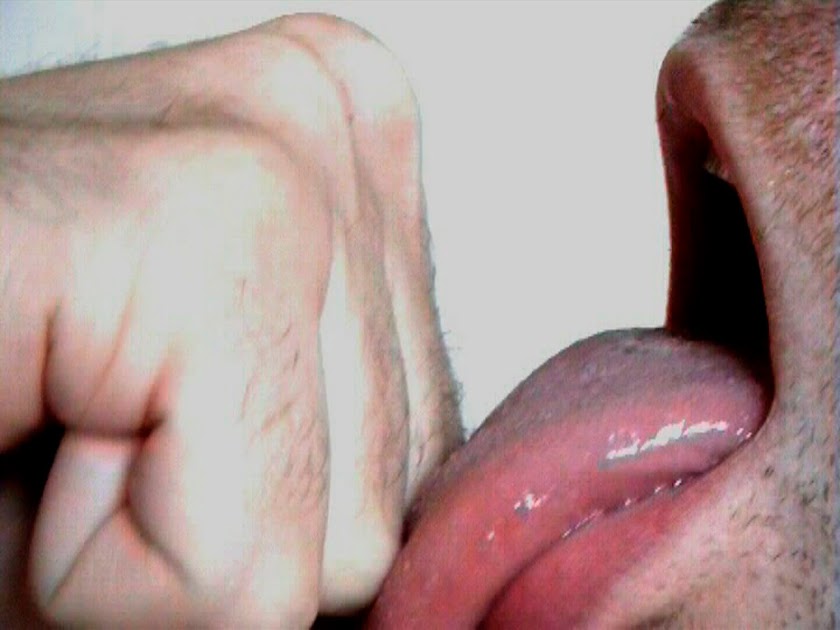
I am currently working on a series of digital images capturing disembodied fragments of the external body, particularly the hands, and manipulating them to create hybridised images which appear to replicate internal bodily landscapes, cells and viruses in particular.
Thursday, 21 February 2008
Video and istallation Work 2004 - 2007
Tenderness (digital video, 2004)
Negotiation 1 (single screen digital video installation, 2004)
33.3 (multi-screen digital video installation, 2005)
The Rules of Engagement (digital video, 2006)
Yours, Sincerely (digital video, 2007)
Subscribe to:
Posts (Atom)