Showing posts with label microscopic. Show all posts

Friday, 20 August 2010

Imagining the unknown


Drawing of the homunculus inside human spermatozoa by Nicolaas Hartsoeker
1694

The drawing was conceived by Hartsoeker not from what had seen, but what he presumed would be visible if sperm could be adequately viewed.

Tuesday, 10 March 2009

Base Elements- Initial Proposal

Paul Grimmer
Mutations

During the residency I will continue looking at the structural interconnectedness of our bodies and the natural and constructed world. I am interested in researching and drawing on some of these innate and metaphorical connections to start planning a new body of work. Creating a series of experimental mutations or hybrids, splicing the visual languages and symbolism of science, mythology and spirituality, using the body as connective tissue. The research will be largely process based, resulting in a series of digital composite images considering micro and macro morphology, transition, mutability and mutation. The images will be composed from photographic and microscopic sources gathered prior to and throughout the initial phase of the residency. These images will help to form and inform the eventual creation of a larger work involving their transfer into/onto sets of repeating tessellations. Using this system of ordered and controlled composition as a framework and a metaphor I want to look at difference, the potential for rapid evolution or mutation, which transcends and permeates boundaries.

My research will centre on examining physical and biological structures and their intersection with architectural and psychological space. I am particularly interested in the use of geometry in sacred art and architecture and will be researching the use of mosaic and tiling in religious – particularly Islamic – design. I will also look at iconography and representations of transition or transcendence in mythological and spiritual belief systems. I hope to transfer the images created during the residency onto ceramic tiles and will research the possibility of this process during my time at ACA. Tiles could be seen as a representation of transition, fashioned from the earth by man and widely used through history to decorate places of worship, representing transcendence or the divine. In a contrast of aesthetic and function, they are also used in utilitarian settings: municipal buildings, hospitals and institutions.

I will work with Dr David Bhella at the Medical research Council’s Virology Unit, building on the work I began in December 2008 on a residency funded by the MRC. I will study the symmetry and geometry of virus structure on several levels of magnification. I will look at source imagery from the electron and confocal microscopes in the unit and look at the atomic structure beyond this. I will also carry out research into virus morphology and mutation using scientific reviews, papers and samples at the unit. The virus is able to change rapidly to avoid detection and elude the body’s natural interferon responses. This high incidence of mutation can be caused by flaws in the genetic material of the virus, flaws that become key to its survival.

In Allenheads I will to explore the mining history of the surrounding landscape, in particular looking at the crystalline structure and geometry of minerals mined in the area. Killhope Lead Mining Museum is home to the National collection of Spar Boxes, displays created by the miners to display Fluorspar and other minerals unearthed as the commercial byproducts (tailings) of lead mining. I hope to visit and possibly photograph some of the crystals in their collection. I will also spend time navigating the surrounding landscape, collecting images of other things of potential beauty that have perhaps been cast aside or left behind. There is also the possibility of exploring some of the abandoned mines in the area with Alan Smith.

During my time in Newcastle I will be working with sculptor and prosthetic artist Satinder Chumber to consider ways of physically changing my body based on observed mutation throughout history. We have begun looking at differences of form caused by genetic mutation and evolution and discussing the possibilities of designing some simple alterations using silicone and stage make-up. I will be collaborating with Colin Davison and Ian Bailey to photograph and video document the resulting mutations. The work with Ian Bailey will form the final stage of a series of mentoring sessions provided by a DigitalCity, Middlesbrough scheme.

The results of these separate strands of research will feed visual information into the work. Elements of other recent collaborations with Durham University Professor of Archaeology Charlotte Roberts and Bill Earnshaw at the Wellcome Trust Centre for Cell Biology in Edinburgh will also feed into the work. I will document the residency process on a project blog.

Saturday, 28 February 2009

Viral Production

After sitting around as digital files on my computer for almost a year I decided to get the Viral Portraits produced for my slot in the Waygood Boutique.

I am part of the Waygood's supporting artists programme which does what it says on the tin really. The massive redevelopment of Waygood's city centre gallery space in Newcastle is drawing close to completion and the Boutique, a small selling space on High Bridge in Newcastle, allows them to maintain a visible presence in the city throughout. During February/March work by Katy Merrington, Sarah Wales as well as the Viral Portraits will be showing at the Boutique.

The production involved working with printer Jack Lowe and framer Bruce Reid at Hoults Estates in Byker, Newcastle and Bay Plastics in North Shields. Jack kindly helped me to optimise the composite images and printed the archival inkjet images on Cotton Rag. Together with George Pickering at Bay Plastics a method of sandwich mounting the images between transparent oval Perspex sheets was designed, using transparent acrylic nuts and bolts to fasten. Bruce formed the final part of the process and was responsible for cutting and assembling the work. However, it became clear through the process that cutting by hand was not going to be able to provide the precision required so the prints are to be laser cut by Steve Brown at S.B. Signs in Newcastle upon Tyne.

The decision to produce the Viral Portraits in this way came about after my residency with the Medical Research Council's Virology Unit in Glasgow. I learned about a process used when gathering samples of virus particles known as vitrification. this process involves freezing material very quickly so it forms glass like ice with no visible crystals. Other more commonly recognised methods for studying samples involve using glass microscope slides. I really liked the idea presenting the images in a way which referenced these ways of looking, on an expanded scale.

My original plan was to show the Viral Portraits in their completed form at the Boutique and sell an edition of 10 small framed reproductions, also archival inkjet prints by Jack Lowe and framed by Bruce Reid. Unfortunately, production problems resulted in the original works not being ready in time and the smaller edition print being shown. The edition prints are presented in white frames with oval portrait style white mounts.

On a positive note, Helen Ratcliffe of Allenheads Contemporary Arts (ACA), where I am currently working on a Base Elements residency asked me if I would like to exhibit in the inaugural show at their newly renovated ACAdovetail gallery on Blandford Square in Newcastle. So the work will be able to show after all - phew! The opening of the show and launch of ACA's first book, both entitled 'Setting the Fell on Fire' will take place on April 2nd, more to follow....

Monday, 1 December 2008

Chimera


Chimera 2008, Iroko hardwood, MDF, Perspex, brass fastenings, 24" LCD monitor, computer equipment and HD video (22 min, 40 sec), 103 x 65 x 52 cm

Specimen case by Mark Burns and Tony Wiles

Thursday, 20 November 2008

Chimera - Hybrid Specimen 1

The 5 body-landscape hybrids shown here as separate cycles and clips are combined to form the video component of Chimera (22 min. 40 secs.). The cycles follow the order indicated here on a continuous loop within the specimen case shown below. For the purposes of the blog they have been separated.


Time-lapse footage of cellular mitosis used with the kind permission of Susana Abreu Ribeiro at The Earnshaw Group, The Wellcome Trust Centre for Cell Biology, Edinburgh

Chimera - Hybrid Specimen 2


Time-lapse footage of cellular mitosis used with the kind permission of Alexey Khodjakov, Wadsworth Center, Albany, New York

Chimera - Hybrid Specimen 3 (clip)


Time-lapse footage of cellular mitosis - interphase used with the knid permission of Dr. Yuko Mimori-Kiyosue on behalf of Shoichiro Tsukita

Chimera - Hybrid Specimen 4


Time-lapse footage of cellular mitosis used with the kind permission of John Daum & Gary J Gorbsky

Tuesday, 18 November 2008

Chimera - Hybrid Specimen 5


Time-lapse footage of cellular apoptosis used with the kind permission of Susana Abreu Ribeiro at the Earnshaw Group, The Wellcome Trust Centre for Cell Biology, Edinburgh

Chimera - Specimen Case


Chimera specimen case constructed by Mark Burns (Burnie) and Tony Wiles, dimensions - 900 x 600 x 400 cm, constructed using Iroko hardwood, Perspex, brass fastenings, 24" LCD monitor and computer equipment.

This design had to be slightly modified by shortening the legs for the final piece.

Chimera - Production Stills


Wednesday, 28 May 2008

Viral Portrait


Viral Portrait (manipulated digital image, 2008)

This is the first image produced from a body of works entitled Dark Matter. The works incorporate digitally manipulated external bodily features re-appropriated to create fictional micro/macro organisms. Using medical points of reference to create a visual distraction from the unnatural construction of the image. The images in the series are based around studies of viruses, bacteria and nano agents, things which are invisible to the naked eye, so small that they are almost incomprehensible. Organisms which are specifically engineered, either by nature or by man to infect or heal, damage or repair at a cellular level.

Saturday, 1 March 2008

Viral and cellular body

Viral (Body)


Cellular (Body)


Viral (Body) (detail)


Cellular (Body) (detail)


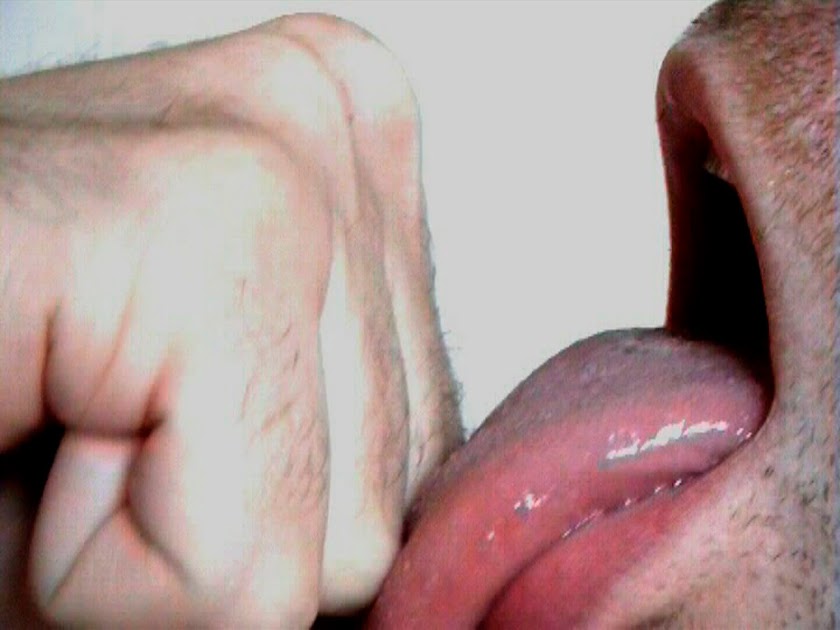
I am currently working on a series of digital images capturing disembodied fragments of the external body, particularly the hands, and manipulating them to create hybridised images which appear to replicate internal bodily landscapes, cells and viruses in particular.